.svg)
AI SEO Agency for B2B Companies on Webflow
Answer Engine Optimization. Schema markup. Entity graphs. The infrastructure that gets your brand cited by ChatGPT, Perplexity, and Google AI Overviews.







What is Answer Engine Optimization?
01 | Technical Structure
Clean semantic HTML, proper heading hierarchy, and JSON-LD schema markup that tells machines exactly what your content is about. Without this, AI crawlers skip your site.
02 | Entity Architecture
Connected @id references that link your Organization, Authors, Articles, Products, and FAQs into a knowledge graph. This is how AI engines verify that your content comes from a real, trustworthy source.
03 | Content Extractability
Information-dense text organized in clear question-and-answer patterns, with definitions, comparisons, and data that AI systems can chunk and retrieve without losing meaning.





SEO and AEO Results from Real Projects
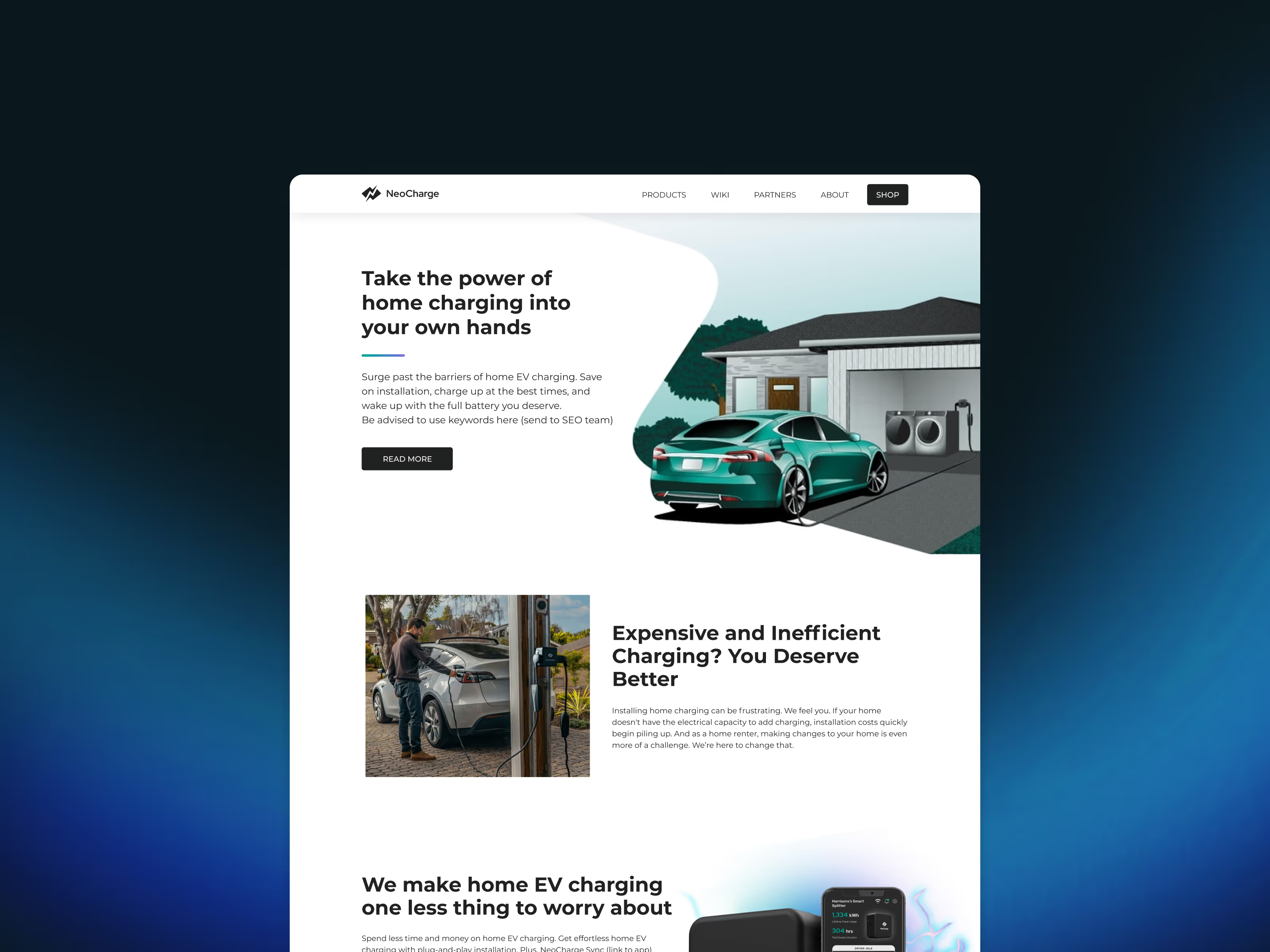
NEOCHARGE | EV CHARGING
Dual-plug adapter for simultaneous EV charging — with built-in power distribution controls. Redesigned the digital experience to clarify the value proposition and remove friction from the user journey. Visitors finally understood the product. Conversions followed.
BeFC | Deep Tech
Complex science translated into structured, schema-marked content that Google and AI engines could parse. Ranked for technical queries that bigger-budget competitors missed.

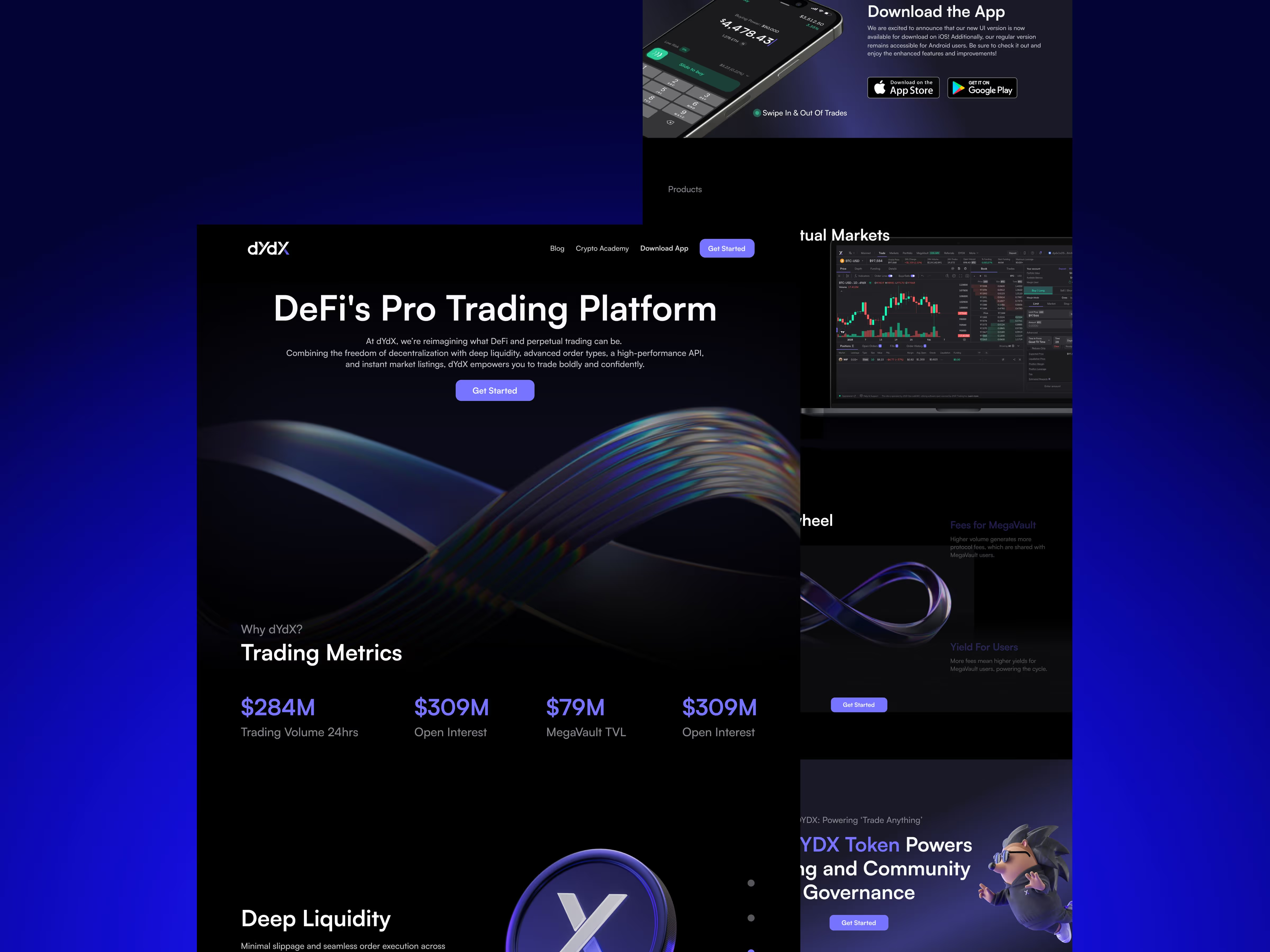
dYdX | Web3 Protocol
600+ blog posts migrated to Webflow with full schema markup, internal linking architecture, and CMS restructuring. Organic visibility gain from content that was already good but technically invisible.
AI SEO Services for Webflow Sites
Schema Markup and Entity Graphs
Every page on your site should tell AI engines what it is, who published it, and how it connects to everything else. We implement JSON-LD structured data across your entire site: Organization, Article, FAQPage, Product, SoftwareApplication, BreadcrumbList, and custom types.
The part most agencies skip: @id referencing. Individual schema blocks are table stakes. Connecting them into a unified entity graph through @id references is what builds the machine-readable knowledge graph that AI engines trust.

Content Architecture for AI Retrieval
AI answer engines do not read your website the way humans do. They crawl the DOM, strip everything except semantic HTML, chunk text based on heading hierarchy, and convert those chunks into vector embeddings. If your content structure is wrong, the chunking algorithm splits concepts mid-sentence and destroys meaning.
• Semantic HTML tags on every container (article, section, aside, main)
• Heading hierarchy that matches information hierarchy
• CMS fields that separate extractable data from rich text body content
• FAQ schema on every page with Q&A content, not only on /faq

Webflow SEO (Technical + Content)
AEO builds on top of SEO. If your site has broken redirects, missing meta titles, thin content, or crawl budget waste, AI engines deprioritize you the same way Google does.
• Core Web Vitals, crawl errors, sitemap validation
• Meta title and description optimization across all CMS collections
• Internal linking architecture for authority flow
• Content gap analysis using Ahrefs and Google Search Console
• Page speed optimization for Webflow
• CMS architecture that scales to thousands of pages

AEO Monitoring and Reporting
You cannot optimize what you cannot measure. We track AI-referred traffic in Webflow Analyze (ChatGPT, Claude, Perplexity referrals segmented separately), run weekly brand mention audits across AI answer engines, monitor schema validation across every page, and report on Google Search Console performance monthly.

Why Us
We Build the Tools Others Use
Most agencies license third-party SEO tools and apply them to your site. We build the tools from scratch, then use them on yours.
Schema HQ
Our proprietary Webflow app for automated schema markup management. Define your Organization, Authors, and WebSite entities once. Schema HQ injects the correct @id references on every page automatically. No manual JSON-LD editing. No broken references when your site scales.
.avif)
AI SEO Copilot for Webflow
The most installed SEO app on the Webflow marketplace. 15,000+ installs. Built by our AEO lead Sofian Bettayeb as the Yoast alternative for Webflow. Keyword-focused optimization with real-time scoring, directly inside the Webflow Designer.

AEO Copilot
AI visibility monitoring built for the new search landscape. Track how ChatGPT, Perplexity, and Gemini surface your brand. Currently in beta, already in use across our client portfolio.


Your AEO lead

When you work with Karpi, Sofian is the person shaping your AEO roadmap, auditing your content architecture, and making sure every schema block, every entity connection, and every content structure decision is correct. The team executes fast because the strategy is right from day one.
Sofian Bettayeb
15 years in digital marketing. Growth Engineer. Webflow SEO Expert. Builder of AI SEO Copilot, AEO Copilot, and the Webflow SEO Checklist.
Sofian oversees AEO strategy for Karpi Studio clients. He sets the technical direction, defines the schema architecture, reviews every implementation, and signs off before anything goes live. With 15 years of experience running digital marketing for Swiss enterprise brands and building the SEO tools that 15,000+ Webflow users depend on, he brings a level of depth that most agencies cannot match.
He spoke at Webflow Conf 2024. He writes the technical SEO and AEO guides that Webflow developers reference as their standard. He helped Nestlé R&D teams go from idea to product launch in 6 months. He has built growth engines for billion-dollar companies and applies the same rigor to every Karpi engagement.
%201.svg)


How it works
Four Steps to AI Visibility
From assessment to continuous optimization. AEO is not a one-time project.
AEO Assessment (Free)
We audit your site for schema coverage, content extractability, heading hierarchy, and AI visibility. You get a report showing exactly where AI engines can and cannot find you.
Technical Foundation
Schema markup across all page types, entity graph construction with @id referencing, semantic HTML corrections, CMS field restructuring. Weeks 1 and 2.
Content Optimization
FAQ sections on high-value pages, question-format headings, definition blocks, information density improvements. Rewrite thin content that AI engines skip. Weeks 3 and 4.
Ongoing Optimization
Continuous monitoring, new structured content, expanded entity connections, AI citation tracking. Ongoing engagement.
Who We Work With
High-Traffic B2B SaaS
Series A+ companies with 50,000+ monthly visitors. Your website drives 30% or more of revenue. You already rank for some keywords but AI answer engines do not cite you. You need the technical layer that turns existing authority into AI visibility.
Professional Services Firms
Established firms with 5,000 to 50,000 monthly visitors and 60%+ revenue from referrals. When a referral Googles your firm or asks ChatGPT about your category, your site needs to be the answer.
AEO Resources


.avif)
.avif)
.avif)
.avif)

.jpeg)
Frequently Asked Questions
Can you guarantee citations from ChatGPT or Perplexity?
No. Anyone who guarantees this is lying. We can guarantee the work — clean schema, structured answer content, entity graphs, citation-friendly formatting. Whether ChatGPT picks you over a competitor on any given query depends on the model, the prompt, and which sources the engine treats as authoritative that week. Most clients see citations within 2–6 weeks. We show you what we did and what was cited, week by week. We can't promise a specific number.
How do you measure AEO results when AI engines don't pass referral data?
You're right that ChatGPT and Perplexity don't show up cleanly in Google Analytics. We measure three ways: Bing Webmaster's AI Page Stats (citation counts and the queries that triggered them), weekly prompt-tests of your buyers' real questions across ChatGPT, Perplexity, and Claude, and referral anomalies — direct or "(none)" traffic spikes after a citation appears that map to AI sessions. None perfect alone. Together they show whether AEO is moving.
Do we have to be on Webflow to work with you on AEO?
Yes. We only work on Webflow sites. The AEO methodology — schema markup, entity graphs, content extractability — transfers to any platform, but we go deep on Webflow specifically: the CMS structure, the limitations, the workarounds, the schema implementation patterns. If you're on WordPress or custom code, an agency that specializes in your stack will get you better results.
How long until we start seeing AI citations?
First citations usually show up in 2–6 weeks for sites with existing organic traffic. Faster if the foundation is clean (schema, sitemap, sensible information architecture), slower if we're rebuilding from a broken site. We track citations weekly in Bing Webmaster's AI Page Stats and prompt-test in ChatGPT and Perplexity, so you see the curve as it happens — not a quarterly report.
What's the difference between SEO and AEO?
SEO optimizes pages to rank in a list of blue links. AEO optimizes pages to be cited as the answer when ChatGPT, Perplexity, and Google AI Overviews generate a response. The technical work overlaps — schema, structure, content clarity — but the signals that get you cited aren't the same ones that get you ranked. You can win at one and lose at the other.