.svg)

The basic goal of web business is simple: Get more people to do what you want them to do.
While getting new visitors (traffic) is getting harder and more expensive every year, Conversion Rate Optimization (CRO) is the key strategy that lets you get more value from the visitors you already have. A better conversion rate means your website is working well and making you money.
What is the Conversion Rate?
The conversion rate is a simple math score: It is the percentage of your website visitors who complete a desired, valuable action.
This "desired action" (called a conversion) can be anything your business aims for, like buying a product, signing up for a newsletter, or starting a free trial.
The Conversion Rate Formula
Formula: Conversion Rate = ( Total conversion/ Total visitors or interactions)*100
Why is CRO Important for Your Website's Success?
Customer Acquisition Costs (CAC)—the money it takes to get one new customer—are increasing everywhere. Paid ads cost more, and changes to privacy make targeting people harder. With companies needing to save money, every dollar spent must be smart.
CRO is the smartest solution. It's a proven way to improve the Return on Investment (ROI) across all your marketing efforts.
- CRO is more than tactics; it's a mindset that focuses on making your website easy and enjoyable for the user, which directly supports your business goals.
- It's a process that is never truly finished. You must constantly revisit and improve your conversions to keep boosting your revenues.
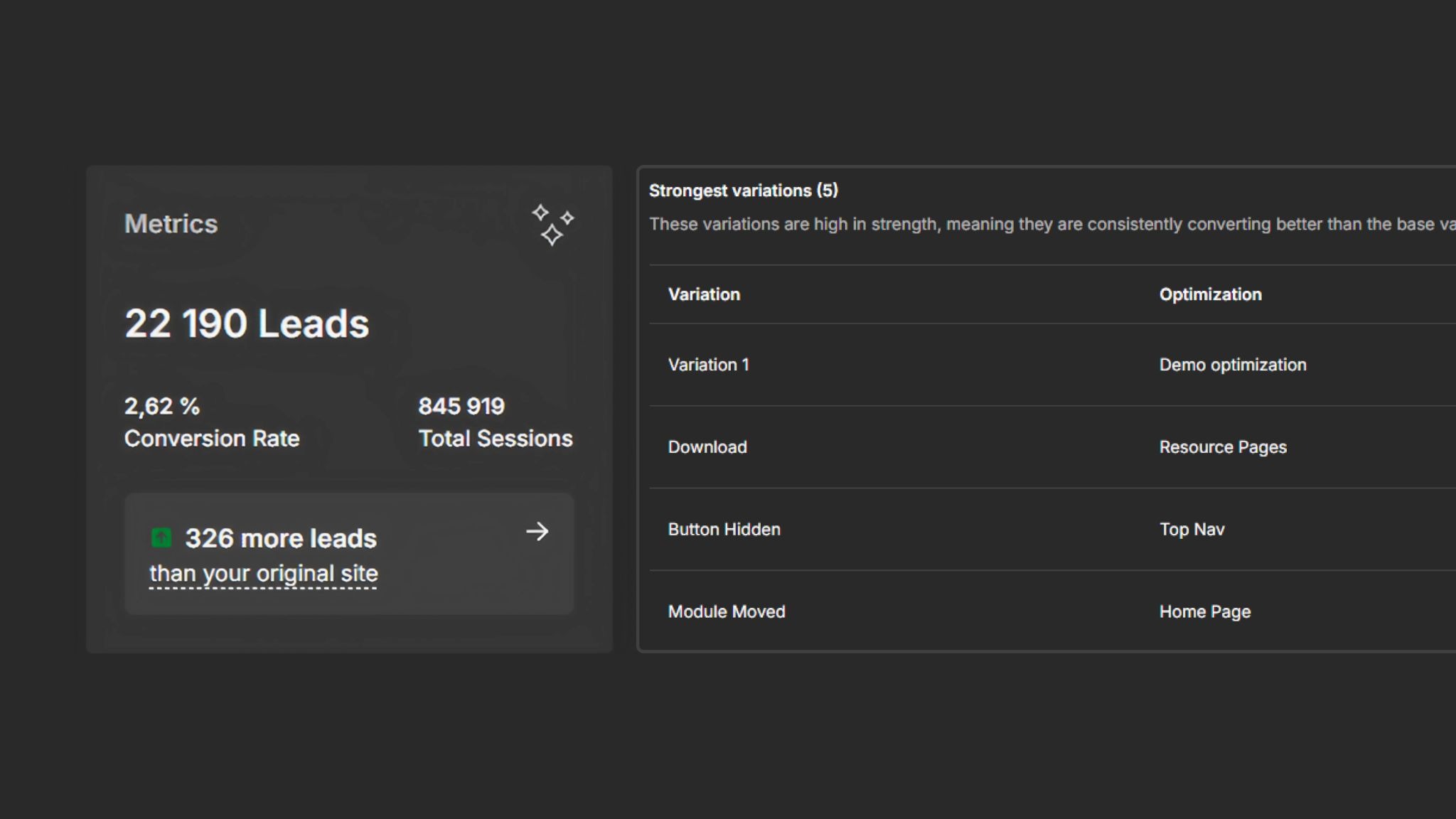
How Do You Start Optimizing Your Conversions?
Conversion Rate Optimization is all about taking specific steps to improve the conversion score of your pages. This could mean changing a button's message or adjusting the main sales pitch on your page.
The most common and effective ways to implement CRO include:
- Structured A/B Testing: Comparing two versions of a page to see which one performs better.
- User Experience (UX) Research: Studying how real people use your site.
- Personalization: Customizing the experience for different groups of visitors.
The process of optimization is a simple, repeatable loop: Try, Learn, Implement, and Try Again.
The 4-Step CRO Action Plan
Before you can start fixing your pages, you need to understand where and why visitors are leaving.
Step 1: Understand Your Customers
Before optimizing, you need to know your visitors' behaviors, what they like, and what blocks them from converting.
- Gather this information using tools that show you quantitative data (numbers) and qualitative research (feedback and interviews).
- Tool Tip: A platform like Webflow Optimize can be a great tool for analyzing user behavior. Other tools: MS Clarity, Hotjar.
Step 2: Analyze Your Conversion Funnel
Next, you must closely inspect every step your visitor takes before converting. This process is called funnel analysis.
- The goal is to find the key points where visitors 'drop off' (leave before converting).
- Tool Tip: You can calculate your rate and pinpoint drop-offs using a web analytics tool (like Webflow Optimize) or by studying a heatmap which shows where users click and scroll.
Step 3: Gather Detailed User Information
After finding the drop-off points, gather all the information you can about the users who left.
- This is the most important step. Not every problem is a clear-cut number. You need to understand the reason behind the drop-off.
Step 4: Test, Prioritize, and Implement
Once you know where and why people drop off, you can start setting priorities based on your company's goals.
- Use A/B testing or new design ideas and track the results.
- Pro Tip: Always start by testing only one component at a time. Testing too many things at once makes it difficult to know what change actually caused the result.
What is a "Good" Conversion Rate?
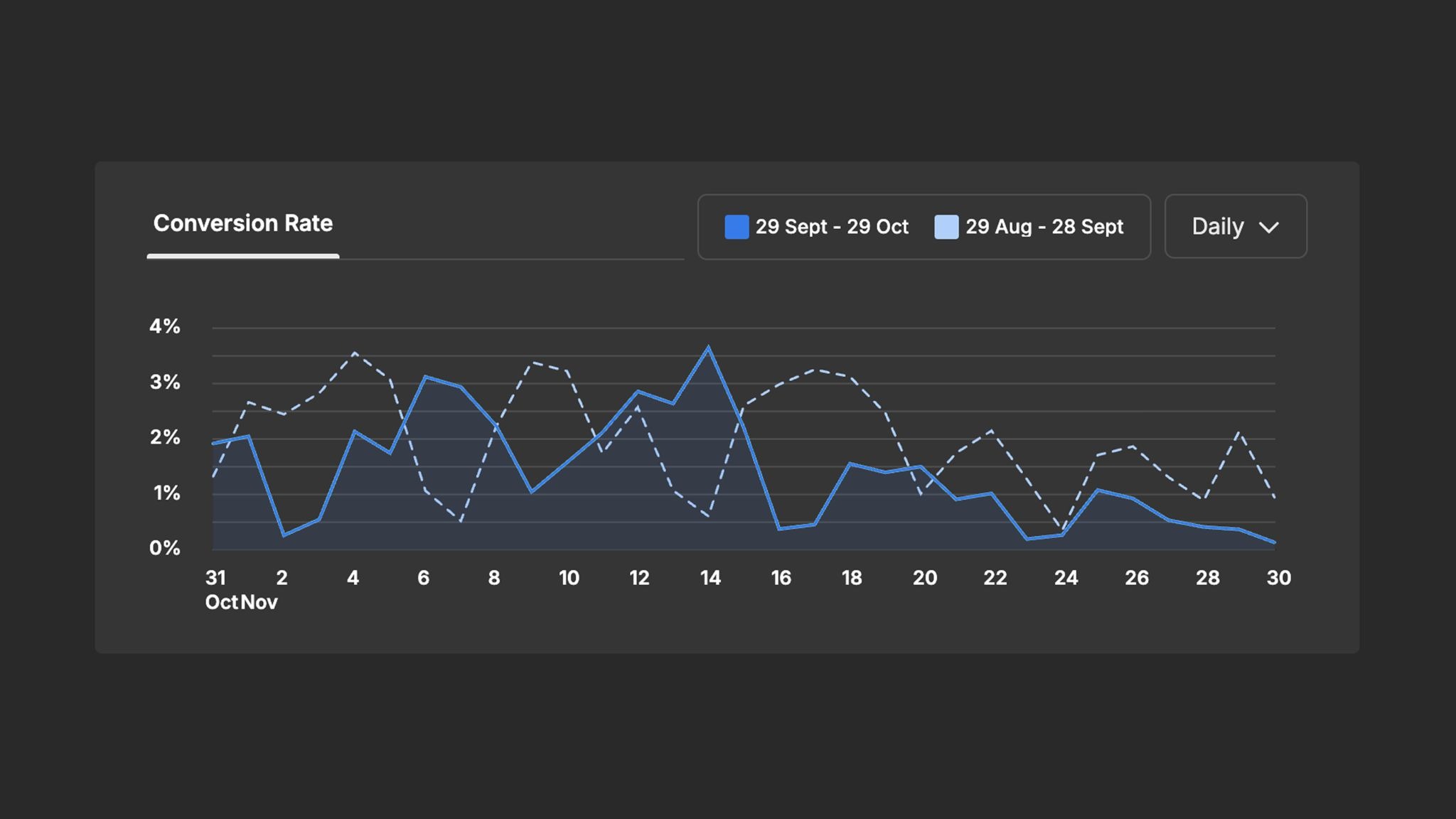
A "good" conversion rate is a moving target, it completely depends on your industry, your goals, where your traffic comes from, and your audience.
The Key Goal
Focus on understanding your baseline (your current score) and making constant, small improvements towards your business goals.
Industry Average
Depending on the source, the average conversion rate is usually between 1% and 4%.
Smart ways to increase your CRO
CRO is more than just running tests. Here are five powerful strategies:
- Choose Quality Over Quantity: Having hundreds of leads means nothing if none of them are valuable. Sometimes, making your call-to-action (CTA) a little harder to click will cut the low-quality leads and increase the valuable ones.
- Real-Time Interviews Trump Hypotheses: Your guesses mean nothing unless you talk to real customers. Interview them to understand their actual needs and build your website around those needs.
- Function Over Beauty: A beautiful website is good for attracting attention, but it's not enough. A website must function perfectly to convert leads. Check if your site is easy to use, not just if it looks nice.
- CRO for Every Page: Optimization isn't just for the homepage. You need to optimize every part of your funnel: landing pages, forms, and secondary CTAs all need improvement.
- CRO is Not Only A/B Testing: While testing is vital, sometimes a simple design change,like adjusting a color palette can make a huge difference in attracting the right niche audience.
Where to Implement a CRO Strategy
Here are the prime locations on your site where CRO efforts yield the biggest gains:
1. The Homepage
The homepage is your first impression and a key tool for guiding visitors deeper into your site.
- Strategy: Emphasize links to product information, offer a free sign-up button, or incorporate a chatbot.
- Pro Tip: A/B test headlines and imagery that are value-driven and show intuitive design to see which combinations drive the most engagement and conversions.
2. The Pricing Page
The pricing page is often the decision-making point for many visitors.
- Strategy: Modify pricing intervals (monthly vs. yearly), clearly describe product features for each price level, or add a simple pop-up form for a price quote.
- Pro Tip: Simplify your pricing options, add social proof (like testimonials or trust badges) to reduce worry, and A/B test tiered pricing models to find the sweet spot.
3. The Blog
Your blog is a powerful conversion tool, turning readers into leads.
- Strategy: Include clear Calls-to-Action (CTA) throughout the article, or offer readers a free e-book or report in exchange for their email address.
- Pro Tip: Contextually relevant CTAs (e.g., a form about "Advanced Strategy" at the end of a strategy post) significantly boost lead-generation efforts.
4. Call-to-Action Buttons
CTAs are the gateway to conversions—they are where the money is made.
- Strategy: Ensure CTAs are highly visible, visually different from the rest of the page, and clearly state the action.
- Pro Tip: Use compelling, action-oriented text that clearly states the benefit. For example, use "Get Your Free Quote Now" instead of a basic "Submit."
5. Landing Pages
Since landing pages are built specifically for one action, they often have the highest average conversion rate (around 23%).
- Strategy: Optimize with preview content (e.g., a video of last year's event) or use bullet points to convey key information quickly.
- Pro Tip: Keep landing pages focused and free of distractions. Minimize navigation options and ensure the main form or CTA is prominently displayed above the fold.
6. Forms
Make all your forms (sign-up, contact, lead generation) as easy to use as possible.
Strategy
Minimize the number of required fields, use clear labels, and provide instant validation feedback (e.g., a green checkmark when a field is filled correctly).
Pro Tip: Shorten your forms to only ask for essential information. Adding microcopy (small explanations for why certain data is needed) can also help reduce hesitation.
CRO and AEO: Better together
CRO and Answer Engine Optimization (AEO) work best together. While CRO improves conversion rates for existing traffic, AEO ensures AI answer engines surface your content to new audiences. A site optimized for conversion but invisible to AI search is leaving pipeline on the table. A site visible to AI but not optimized for conversion is wasting the traffic it gets.
--
If you're ready to truly shake up your digital performance, schedule a consultation with us today!
More Webflow CRO guides
Go deeper on each step: Webflow Optimize setup in 5 steps, CRO for growing companies, and the Webflow CRO service.


.avif)